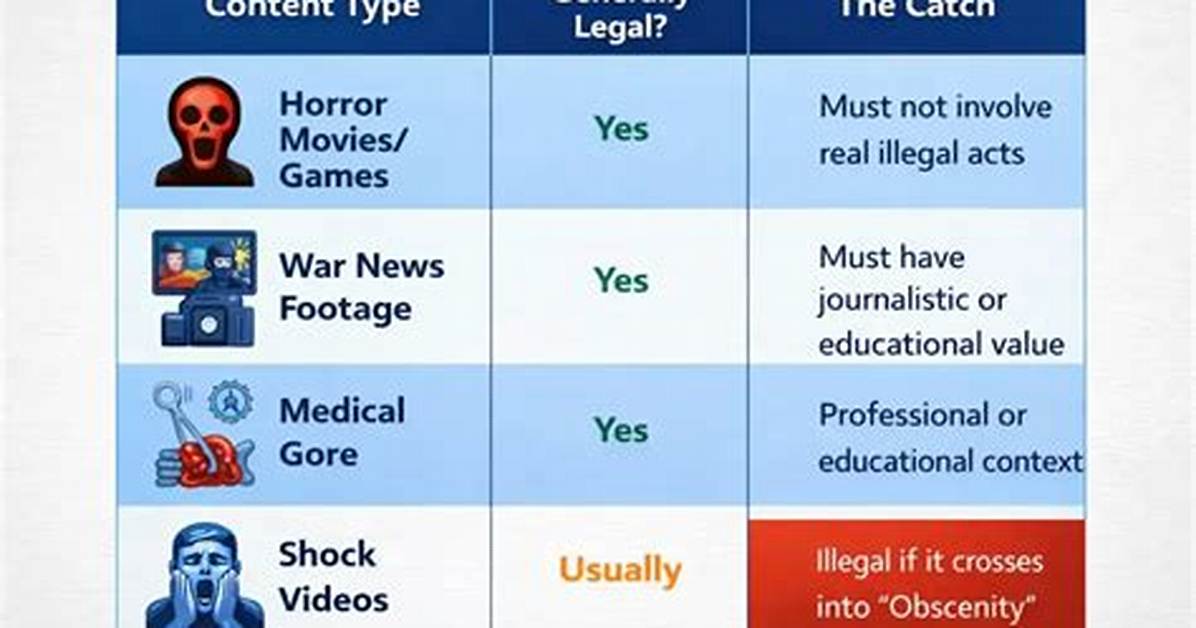
In today's digital age, the accessibility of graphic and disturbing content has raised significant questions regarding legality and morality. The topic of whether viewing gore is illegal is not just a simple yes or no; it involves a complex interplay of legal definitions, cultural norms, and ethical considerations. This article aims to dissect the nuances surrounding the legality of viewing gore, shedding light on the legal frameworks that govern such content, and providing insights into the societal implications of its consumption.
The internet has made it easier than ever to access a wide array of content, including videos and images that depict violence, death, and other graphic scenarios. While some individuals may view such content out of curiosity or for entertainment purposes, others may find it disturbing or triggering. As a result, understanding whether viewing gore is illegal requires examining various legal aspects, including obscenity laws, freedom of speech, and the potential impact on mental health.
This article will explore the legal landscape regarding the viewing of gore, discuss the potential consequences of consuming such material, and provide guidance on how to navigate this controversial topic. By the end of this article, readers will have a clearer understanding of the legalities surrounding gore content and its implications on personal and societal levels.
1. Legal Framework Surrounding Gore Content
To understand whether viewing gore is illegal, it is essential to consider the legal framework that governs such content. Different jurisdictions have varying laws regarding obscenity, violence, and graphic imagery. Generally, the legal definition of obscenity includes material that appeals to prurient interests and lacks serious literary, artistic, political, or scientific value. However, gore content may not always fall under this definition, particularly if it is presented in a context that serves a legitimate purpose.
1.1 United States Laws
In the United States, the First Amendment protects freedom of speech, which includes the right to access various forms of expression, including potentially disturbing content. However, this protection is not absolute. Content that is deemed obscene or incites violence may be subject to legal restrictions. For instance, the Miller test is used to determine whether material is legally obscene, which involves assessing whether the content appeals to sexual interests, is patently offensive, and lacks serious value.
1.2 International Laws
Internationally, the laws governing gore content can vary widely. Countries like Germany and Australia have strict laws against the distribution and viewing of violent and graphic material, while others may have more lenient regulations. It is crucial for individuals to be aware of the laws in their respective countries regarding the consumption of gore content.
2. Freedom of Speech vs. Obscenity
The debate between freedom of speech and obscenity is central to the discussion of whether viewing gore is illegal. Advocates for free expression argue that individuals should have the right to access any content they choose, including graphic depictions of violence. On the other hand, opponents argue that such content can have harmful effects and should be restricted to protect society.
2.1 The Role of Context
The context in which gore content is presented plays a significant role in determining its legality. For example, educational or documentary purposes may provide a legitimate justification for viewing graphic content, whereas sharing it for shock value may not. Courts often consider the intent behind the content when making legal determinations.
2.2 Societal Concerns
Societal concerns regarding the normalization of violence and desensitization to suffering are often cited in arguments for restricting access to gore content. The potential for such content to influence behavior, particularly among impressionable individuals, raises ethical questions about its accessibility.

